The aging population in the Western world presents society with new challenges and higher demands on healthcare. Many individuals experience reduced mobility or reduced muscle strength due to aging, muscle diseases, or trauma, factors that can lead to a decreased quality of life, a loss of independence, and social exclusion.
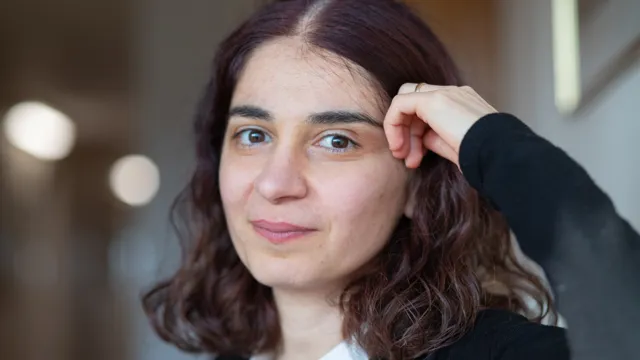
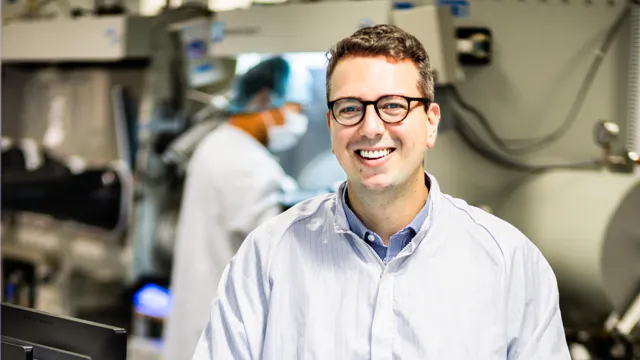
 Photo creditIn their extended collaboration, Edwin and Nils-Krister will have the opportunity to further develop their research. They express deep gratitude to the Foundation for continuing to support research in textile muscles and mechanically active textiles.
"We feel great gratitude towards the foundation for their continued support of our research in mechanically active textiles. This is now the third grant we have received from them. We are also very happy that we can continue our development of textile muscles".
Both look forward to continuing the collaborative project between LiU and the University of Bor氓s. Through their research, they will further develop textile muscles by combining advanced textile fabrication with new electro-mechanical materials. They have already improved them since their first proof-of-concept in 2017, enabling integration into various textiles and prototypes. This support allows them to continue advancing their project and achieving even better performance from their textile muscles.
Opportunities for a long and independent life
However, through new technologies, it is possible to enable people to lead long and independent lives. Robotic orthoses and exoskeletons are examples of devices that can support limb movements and optimize rehabilitation. Unfortunately, these are often perceived as unnatural, rigid, and inflexible. That's why Edwin and Nils-Krister believe that a paradigm shift is needed for such assistive devices. By creating devices that mimic human forms and soft movements, more natural aids can be developed, ones that can be discreetly worn under clothing. This approach could reduce stigmatization and, in turn, allow for greater adaptation and social inclusion, which are valuable for public health.Research in textile muscles and mechanically active textiles
"We feel great gratitude towards the foundation for their continued support of our research in mechanically active textiles. This is now the third grant we have received from them. We are also very happy that we can continue our development of textile muscles".
Both look forward to continuing the collaborative project between LiU and the University of Bor氓s. Through their research, they will further develop textile muscles by combining advanced textile fabrication with new electro-mechanical materials. They have already improved them since their first proof-of-concept in 2017, enabling integration into various textiles and prototypes. This support allows them to continue advancing their project and achieving even better performance from their textile muscles.
Research for the Global Goals - Good Health and Well-being
Photo credit Thor Balkhed With continued research in textile muscles and soft robotics, numerous applications can be developed. Healthcare professionals can receive assistance in the medical field, and craftsmen using heavy tools in their profession can get a helping hand. Furthermore, with haptic clothing, which provides tactile feedback to the user, video conversations can offer the possibility of virtual hugs. Research aligned with the global goals for sustainable development, good health, and well-being is a fundamental requirement for people to reach their full potential.
Read more about Erling Persson Foundation: Erling Persson Foundation