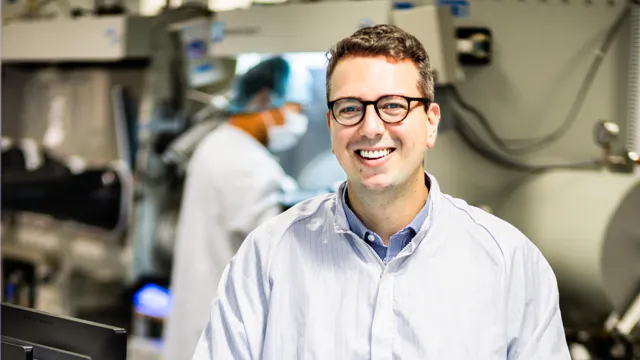
Through funding initiative for strategic collaborative projects from Wallenberg Centre for Molecular Medicine (WCMM), clinical fellows have the chance to propel their research into new dimensions.
Leading the charge is a visionary project titled "Expanding the use of hyperspectral imaging to detecting markers of deterioration in models of acute sickness." Led by WCMM Clinical Fellow Daniel Wilhelms and WCMM Fellow Rolf Saager, the project dives into microvascular dysfunction to transform emergency healthcare.
Addressing gaps in emergency care
Each year, more than 2 million patients in Sweden visit an emergency department, resulting in nearly 2.6 million visits. The Emergency Departments frequently experience, leading to a rise in return visits and increased mortality.
The research outlines three key objectives:
- Develop and validate hyperspectral imaging for acute blood loss/shock models.
- Explore changes in acute bacterial infection models using lipopolysaccharide (LPS) injection.
- Improve risk stratification for emergency patients through microvascular imaging and physiological modeling.
Bridging gaps for future clinical impact
The researchers underscore the need to adapt hyperspectral imaging for clinical use. The interdisciplinary collaboration aims to refine technology, ultimately enhancing risk stratification for emergency patients.
The project's timeline is ambitious:
- Year One (2024): Central and peripheral hyperspectral imaging on volunteers simulating acute blood loss/shock.
- Year Two (2025): Exploring acute bacterial infection models through randomized, cross-over experiments.
“By combining interdisciplinary expertise in microvascular imaging, physiological modeling, and access to relevant, models of acute sickness, this project holds a strong long-term potential to enhance methods for risk stratification of emergency department patients, as well as to improve our basic physiological understanding of microvascular dysfunction in acute illness,” the WCMM researchers say.