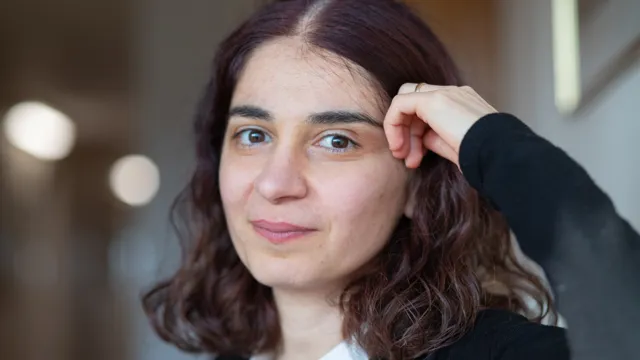
This is one of the observations made by Martin Mileros, who holds a PhD in Industrial Economics from Link枚ping University, in his doctoral thesis. In one study on social media as an industry, he brings together concepts such as 鈥榰sers鈥� and 鈥榸ero-price users鈥� to describe the actors in this relatively new industry, in which users generate their own content.
It is an economy in which people do not pay only with conventional, monetary currency.
鈥楢round 80 million YouTube users pay for a premium account. But 2.62 billion do not pay at all. How does that add up? Well, they pay in other ways, with their personal data or by contributing content themselves. They also pay with their time, because YouTube naturally wants people to use the service as much as possible.鈥�
The human perspective
The human-centric perspective is a key concept in Martin Mileros鈥檚 thesis. He seeks to highlight the human perspective rather than that of the social media platforms.
鈥業n my thesis, I make several recommendations on how we can approach this new digital economy, both as users and content creators, as well as in research and policymaking,鈥� says Martin Mileros.
He has also interviewed 13 people active on social media, namely influencers with as many as hundreds of thousands of followers. As users, they are part of the new digital industry. But the price can be high.
Exposure
鈥榃hile they earn money by promoting products, they also invest a great deal of time and expose themselves by sharing their private lives on social media with all their followers. They may share aspects of their family life. There is also a risk of becoming financially dependent on the companies that commission them.鈥�
The study shows that influencers who share their private lives risk pushing their own boundaries in pursuit of followers. Another source of pressure can be having to compromise their ideals in order to promote a product.
鈥業t can be stressful for influencers to be obliged to fulfil an agreement and promote a product that they do not really want to endorse. Many agree to do it even though they do not really want to. But in doing so, they also risk undermining their personal brands and their credibility. And those are among the very reasons why they are offered these assignments in the first place,鈥� says Martin Mileros.
How can they get around this problem?
鈥極ne way is to examine your own core values and be clear about what you stand for as an influencer. Another is for the client to give the influencer some freedom to do things in their own way, and to understand that this can be beneficial. Influencers have their own style, which is what attracts followers.鈥�
Young influencers need support from those with more experience
Influencers are quite often young when they start out and inexperienced in running a business. This is something Martin Mileros has also observed in his study.
鈥業t is an industry in which appearance often plays an important role. Much of the content may focus on wellbeing and exercise. There is a risk of building a brand around this and then having to maintain a fa莽ade in order to preserve that brand, which in itself can cause stress. This is an industry that lacks support structures. The industry needs to mature. Young influencers need support from those with more experience.
A new framework
Martin Mileros has developed a system for distinguishing between consumers who pay and consumers or users who also produce content for social media platforms.
Starting from the traditional model of a market with a producer and a consumer quickly becomes inadequate.
鈥榊ou cannot describe users simply as consumers. They are also producers and themselves create much of the value that social media platforms consist of. Some earn money by producing content, while others pay to consume it. And then there is another group, zero-price users, who use the service and consume content without paying a penny.
A missing tool
According to Martin Mileros, traditional economics has lacked the tools needed to deal with these types of transactions. User-generated content represents an enormous source of value in the form of entertainment, facts, videos and images.
鈥楥ompanies cannot treat a zero price as profit. If the price is zero, they are not making any money from it. So how do we understand influencers or content creators? They are not traditional entrepreneurs or business owners, and the environment in which they operate does not resemble a traditional market either. We need different ways of looking at it,鈥� says Martin Mileros.