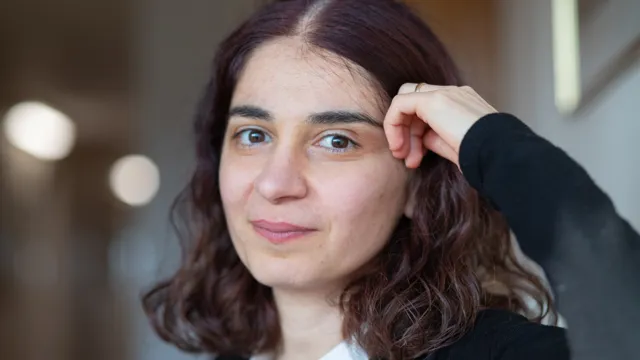
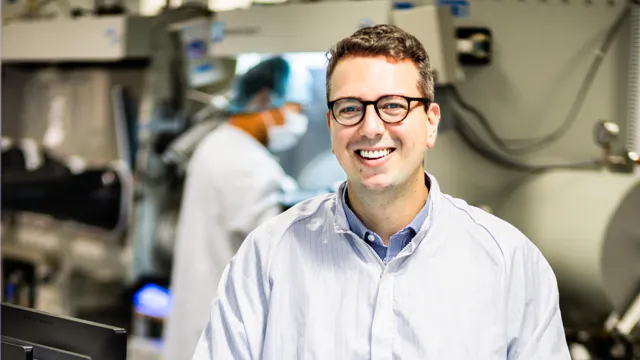
Researchers at Linköping University, including Marie Larsson and Melissa Govender, investigate effects of COVID-19 on the immune system. Photo credit Cecilia Säfström
“The main finding in our study is that many cell types are activated six months after the onset of the illness. This is similar to what happens to the immune cells in settings such as cancer and HIV, when there is a chronic infection in the body, and ongoing immune activation. The activation that we see could mean that the immune cells might not be optimally activated when encountering a new infection, and that they may contribute to silencing an immune response instead of enhancing it,” says Marie Larsson, Professor of Virology at the Department of Biomedical and Clinical Sciences at Linköping University.
Our immune system has two parts: the innate immune system and the adaptive immune system. The reaction of the innate system is quick but unspecific. The adaptive, specific, immune system is activated later, when there is an infection, and learns to attack viruses and bacteria that the body has encountered. The specific immune system also functions as a memory, so that the infection can be beaten much quicker the next time we encounter the same pathogen.
Critical link in our defense
In this study, the researchers have taken a closer look at the innate immune system, which is necessary for the body to organise any specific immune defence at all. The first time the body encounters a new virus, such as SARS-CoV-2 at the outset of the pandemic, the immune system must detect it. A group of cells called dendritic cells are necessary for this to happen. These then activate T cells, which can kill cells infected with SARS-CoV-2, and which in their turn activate B cells, which can produce antibodies that neutralise the virus. The dendritic cells are therefore a critical link between the innate and the adaptive immune systems. In an earlier study of the same patient group, the research group found negative effects on T cells.The researchers examined blood samples from COVID-19 patients admitted to Vrinnevi Hospital in Norrköping, and from a control group consisting of healthy individuals. Photo credit Cecilia Säfström
The researchers examined blood samples from 21 COVID-19 patients admitted to Vrinnevi Hospital in Norrköping, and from a control group consisting of 16 healthy individuals. Blood samples were taken on four different occasions, the first being when the patients were admitted and the last 6–8 months later. Using spectral flow cytometry, the researchers identified different types of immune cells and their likely function.
“Dendritic cell levels were extremely low at the beginning of the infection. Although they later recovered, it seems like their function has not been completely restored. The dendritic cells are more activated than they should be, and we think that this has a negative effect on the immune system,” says Marie Larsson.
Link to disease severity
In their study, the researchers found a connection between disease severity and impact on the dendritic cells. The higher the level of C-reactive protein, CRP, which increases rapidly during inflammatory processes in the body, the slower the dendritic cells recovered. There is also research to indicate that CRP may reduce the body’s ability to form new dendritic cells, which could explain the slow recovery.Marie Larsson, professor in virology at Linköping University. Photo credit Cecilia Säfström
“The conclusion we draw from this is that antiviral drugs should be administered at the earliest possible stage of the infection, to reduce the inflammation, so as to prevent the SARS-CoV-2 virus from running wild and causing a high CRP level,” says Marie Larsson.
The researchers also examined another important type of cell, monocytes, most often found in the tissue. When detecting something foreign and potentially dangerous, these cells emit signals attracting other immune cells, which sets off an inflammatory process. It was discovered that, after six months, the distribution of various types of monocytes among the patients still differs from that among the healthy control group. The researchers believe that the change in monocytes reflects that the body, mainly the lungs, is still healing from severe infection.
The study, which is published in Frontiers in Immunology, was funded by the SciLifeLab/KAW COVID-19 Research Program, the Swedish Research Council, Region Östergötland and Linköping University via COVID-19 ALF funding, and Vrinnevi Hospital in Norrköping.
Article: , Francis R. Hopkins, Melissa Govender, Cecilia Svanberg, Johan Nordgren, Hjalmar Waller, Åsa Nilsdotter-Augustinsson, Anna J. Henningsson, Marie Hagbom, Johanna Sjöwall, Sofia Nyström and Marie Larsson, (2022), Frontiers in Immunology, published online on 4 January 2023, https://doi.org/10.3389/fimmu.2022.1082912
Translation by Anneli Mosell