New research project focusing on more efficient transport systems
10 February 2025
Imagine a city where everything you need – work, shops, healthcare, parks – is within a 15-minute walk or bike ride. That's the vision of the 15-minute city (15mC). A new research project, PERSEUS (Policy Effect Navigator: A Map-based Tool for Effective and Equitable 15mC Policy Synthesis), is developing a tool to help make it a reality.
Photographer:
Thor Balkhed
The new project is planned for 3 years, until December 2027.
Instead of using complex and time-consuming traditional traffic models, the PERSEUS team is developing a fast, responsive, and visually engaging tool for urban planners. This tool will use readily available data, automated analysis, and simplified traffic models to create interactive maps. By doing so, it helps visualize the impact of different decisions on achieving 15mC goals, going beyond traditional AI methods for more effective planning.
"We're not just analysing existing travel patterns, but creating a tool that can simulate the impact of various policy changes," explains Senior Associate Professor Yang Liu, from the Division of Environmental Technology and Management at the Department of Management and Engineering (IEI). "For example, what happens if we add bike lanes, create a new park, or restrict car access in a certain area? The tool will show how these changes impact accessibility, the environment, the local economy, and social equity across different demographics."
The resulting tool will empower planners and decision-makers to explore different scenarios, visualize their potential outcomes, and understand the trade-offs involved. It will also provide a platform for public engagement, allowing citizens to understand and contribute to the planning process.
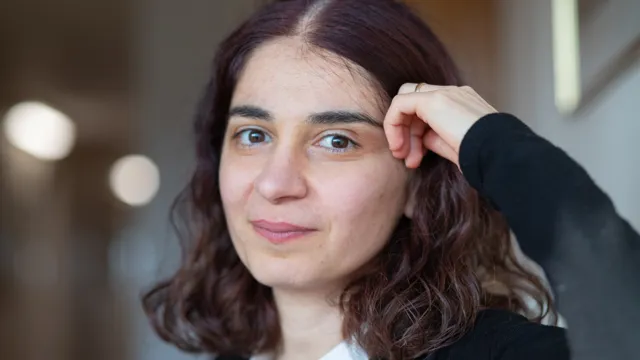
Senior Associate Professor Yang Liu, from the Division of Environmental Technology and Management at the Department of Management and Engineering (IEI). PERSEUS, an EU-funded project through Driving Urban Transitions (DUT) Partnership, brings together researchers from Greece, Germany, Sweden, and Austria. Linköping University (LiU) leads the Swedish consortium including Järfälla Municipality, Linköping Municipality, Swedish Transport Administration (Trafikverket), Swedish National Road and Transport Research Institute (VTI), and Tengbom as collaboration partners. The Swedish consortium led by Senior Associate Professor Yang Liu is playing an important role developing the project's data-driven decision support system. The LiU team involves several researchers: Besma Glaa and Ou Tang at IEI, and Kristina Trygg at the Department of Thematic Studies (TEMA). LiU has received a total funding of SEK 3,630,057 from the Swedish Energy Agency. The project is planned for 3 years until December 2027.