The largest initiative in materials research in Sweden, WISE, will allocate approximately SEK 500 million to seven affiliated universities to build new research infrastructure. SEK 44 million will be allocated to Linköping University, divided into three projects. In addition to WISE, the Swedish Research Council, the Swedish government’s strategic research area for advanced functional materials (AFM), and Linköping University will also finance parts of the new infrastructure.
Electron microscopy at the atomic level
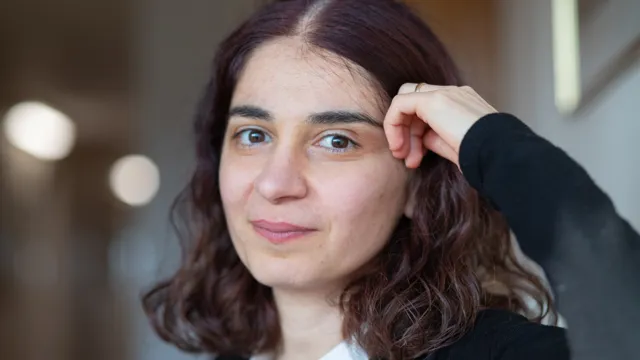
In the first project, a new scanning transmission electron microscope will replace the existing one in the Ångström Building. Moreover, a tool that will produce samples for the electron microscope will be procured.Per Persson. Photo credit Olov Planthaber
“It’s extremely important to achieve a basic understanding of how nanostructured and low-dimensional materials behave at the atomic level,” says Per Persson, professor at the Department of Physics, Chemistry and Biology.
X-ray photoelectron spectroscopy
X-ray photoelectron spectroscopy (XPS) is often used to determine the chemical composition of materials. This is currently a standard method in materials science.
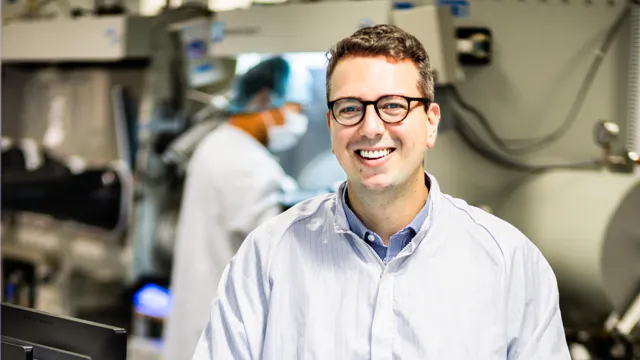
But traditional XPS relies on an ultra-high vacuum to work, making it impossible to study materials and liquids as they are “in nature.” This is why a new type of XPS called Near Ambient Pressure X-ray Photoelectron Spectroscopy (NAP-XPS) will be procured.Mats Fahlman. Photo credit Thor Balkhed
“The new equipment will be optimised to investigate soft and radiation sensitive materials such as organic semiconductors and biological materials. This makes it possible to study, for example, organic solar cells, batteries or biosensors during operation,” says Mats Fahlman, professor at the Department of Science and Technology, ITN.
Additive manufacturing
According to Simone Fabiano, senior associate professor at ITN, the purpose of the project is to expand the additive manufacturing capabilities at LiU. They want to be able to work with 3D printing and manufacturing of components based on organic electronics. Simone Fabiano. Photo credit Thor Balkhed
The Printed Electronics Arena test bed at LiU currently has the expertise for additive manufacturing using both metals and soft materials, such as conductive plastics (which is the basis of organic electronics). However, the current equipment has relatively low resolution and it is only possible to print in 2D.The new equipment will complement that which is already in place, enabling the development of new organic electronics with great precision and in three dimensions.
About WISE
WISE is a collaboration between Chalmers University of Technology, KTH Royal Institute of Technology, Luleå University of Technology, Uppsala University, Stockholm University, Lund University and Linköping University, which also hosts the programme.
It is funded by the Knut and Alice Wallenberg Foundation and the total budget is just under SEK 3 billion for the period 2022–2033.
Read more at: