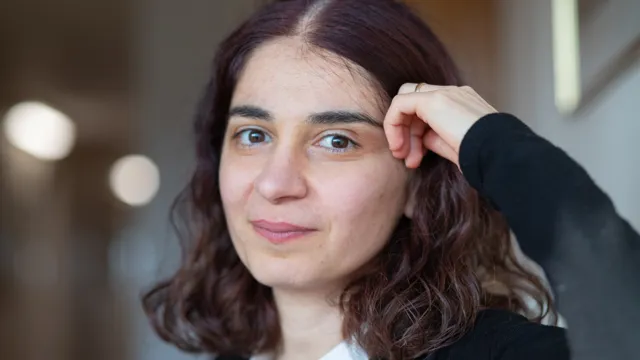
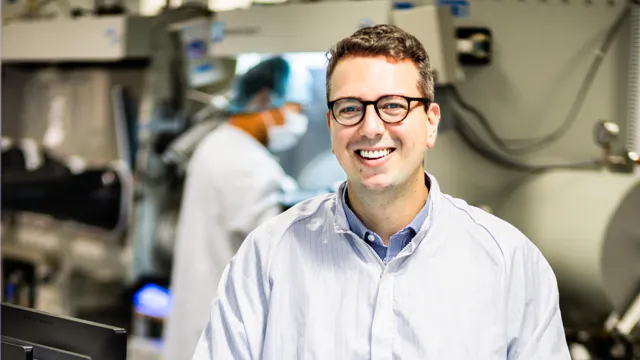
鈥淚t has been great fun working in a group and solving problems together. Many of us come from other universities in Europe and are used to a lot of theory. But in this course, it鈥檚 much more about application. Everyone contributes with their expertise. I really like that鈥� says B谩lint Juhos.
The assignment placed high demands on the students鈥� background knowledge. They were divided into different groups, each approaching the task in slightly different ways. The group we followed began by designing the aircraft on a computer so that it would withstand harsh Arctic conditions.The group started by designing the aircraft to withstand harsh Arctic conditions.
Time and budget
鈥淏ut we have to stick to the time frame and budget. We built a somewhat simpler aircraft with long battery life. We also envisioned sensors that could measure reflection from ice. Wet ice that is melting reflects sunlight more than really cold ice. In that way, the reflection of sunlight can become a measure of ice melt鈥� says David Lochner.
Did you encounter any particular challenges?
鈥淥h, many. But one important lesson was that it鈥檚 one thing to design an aircraft, to draw it in 3D on the computer, and quite another to build it. Rather late in the process, we discovered that the tail was far too small, for example鈥� he replies.
Too stiff
鈥淲hen you land, everything in the aircraft moves, including cables and connections. We needed something that could do the job, but the springs we ordered were too stiff鈥� explains Andrea Vitialie.
We found an ordinary聽desk lamp
Frustrated, they went back into the workshop lab to see what was available.
鈥淲e found an ordinary desk lamp. It had the springs we needed!鈥�
David Lundstr枚m, Associate Professor, leads the course together with the PhD students Stefan Riethausen and Cezar-Victor Boruga.
鈥淭he students have worked independently and done a great job. They鈥檝e worked with laser cutting, 3D printing and electronics. More theoretically, they also solved the task with the arctic climate. And then we went out together and flew the aircraft, which often feels like a big reward for the students鈥� says David Lundstr枚m.