The researchers observe that biogas is attractive on the market and commands good prices. Major players such as Gasum and St1 Biokraft are preparing to build increasingly large facilities in Sweden.
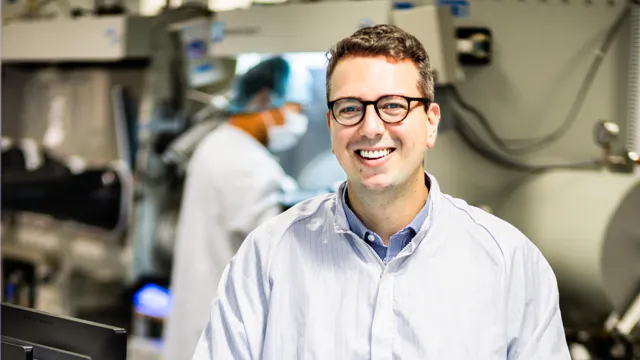
鈥淏ut we can also see that the gas is being sold and used ever further away from the biogas plants. The local product that remains is the biofertiliser. We need to put much greater focus on the biofertiliser business,鈥� says Hans Andersson, associate professor in Business Administration at Link枚ping University.
A complete system
In a three-year project, he has collaborated with researchers in industrial environmental technology. The project is funded by the Kamprad Family Foundation but is also anchored in the Biogas Solutions Research Center, a national knowledge centre at Link枚ping University.
The researchers鈥� immediate observation is that biofertiliser is something of a well鈥慿ept secret.
鈥淏iogas needs to be understood in context, and viewed as a complete system. The whole process allows us to manage and refine streams that would otherwise be waste. And we can create several circular products from the biofertiliser. At present, no one refers to themselves as a biofertiliser producer. All the attention is on the gas.鈥�
In short, the biogas process works as follows: the substrate is loaded into the digester. This may be, for example, household food waste, waste from the food industry, and manure from livestock farming. The material is digested, and the resulting biogas, mainly methane, is captured. The biofertiliser is the by鈥憄roduct that comes out alongside the gas. The volumes are enormous: a single facility can produce more than 100,000 tonnes of biofertiliser per year.
鈥淏ut everything is used- Biogas plants are usually linked to nearby farms that can receive the biofertiliser and spread it on arable land.鈥�
However, the biofertiliser is usually sold to the nearest farm without any further refinement.
Spread on the fields
鈥淏ecause it works. You get rid of the biofertiliser as a residual product and make the money on the biogas. That is why it is not very common to refine the biofertiliser.鈥�
The fact that the biofertiliser is put to use legitimises the entire process of producing biogas, according to Hans Andersson:
The volume of biofertiliser
is set to increase
鈥淭he waste and the manure become biofertiliser, which then serves as a good fertiliser on the fields. Digestion makes the nutrients more accessible to the crops. The biogas process is already a refinement of the material.鈥�
So what, then, is the problem?
鈥淭he quantity of biofertiliser will increase, and the nearest farms may eventually reach saturation. Biofertiliser contains a great deal of water; it is both heavy and bulky. New facilities will need to incorporate technologies both to refine the biofertiliser and to make transport to more distant farms economically viable.鈥�
Extracting phosphorus and nitrogen
There are many ways to divide biofertiliser into different fractions. For example, valuable elements such as phosphorus and nitrogen can be extracted. These are used in mineral fertiliser, for which there is currently no domestic production. Phosphorus is mined in other parts of the world.
鈥淚n theory, LiU researchers have shown that Sweden could become completely self鈥憇ufficient in phosphorus and far more self鈥憇ufficient in nitrogen. This would also make it easier to transport fertiliser between different regions of the country. Livestock farming is more common in forested areas, while crop farming dominates in open plains.鈥�
Biofertiliser needs to become more
widely recognised as a product
Another method is to dry the biofertiliser and pelletise it. The technology for all these solutions is ready, but the processes are energy intensive and not yet fully profitable.
鈥淥ur conclusion is that biofertiliser must become more widely recognised as a product, and that it needs refinement. The local solutions we have seen so far will be organised differently and standardised, and technologies for refinement will be incorporated into new facilities,鈥� says Hans Andersson.