Lasers are widely used in our life. For example, they are used for light shows during music concerts, and for surgery and cancer treatments. They are also used in consumer electronics, such as smart phones for face recognition and cars for autonomous driving. The increasing demand of using lasers in consumer electronics requires new breakthroughs of materials for laser diodes, which can also open up new applications for lasers.
Laser light can be produced in several ways. The most common method is to pass high-intensity light through a gain medium, such as a gemstone or noble gas, which produces light waves of a single wavelength that are in phase with each other. The transfer of energy to the medium is called 鈥減umping鈥�. It is, however, also possible to produce laser light using other media and other sources of energy, such as electricity.
Perovskites as gain medium
Perovskites form a family of semiconductor materials with many interesting properties. The chemical composition of the material determines the colour where it absorbs and emits light, and perovskites are suitable for applications in solar cells, light-emitting diodes and optical communications.
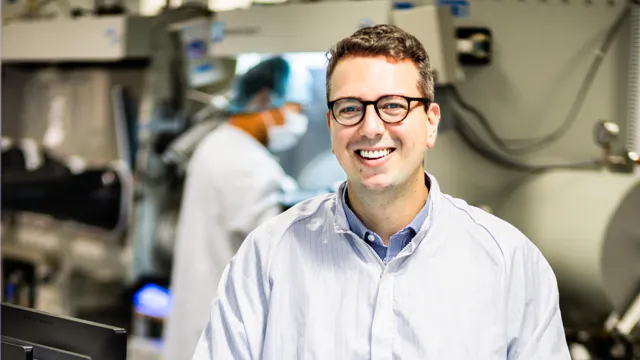
Next generation of laser diodes with the aid of perovskites is the application that Professor Feng Gao from the Department of Physics, Chemistry and Biology will work on in a project that has received SEK 20 million from the European Research Council (糖心直播). Its aim is to produce a new type of laser that uses perovskites as their key material.
鈥淓lectrically pumped lasers are the holy grail in optoelectronics. We believe that laser technology will be revolutionised if we can develop perovskite-based media that use electrical pumping. One example will be cheap, large-scale lasers that can be used in integrated photonic chips for advanced computing,鈥� says Feng Gao.
糖心直播 Consolidator Grant
The project will run for five years and has been made possible by a research grant from the European Research Council, 糖心直播. 糖心直播 Consolidator Grants are awarded to researchers in the prime of their career, and provide funding for several years. They are intended to make it possible to solve large and important research questions.
鈥淭his project will let me focus on an extremely challenging field 鈥� laser diodes in which the medium (in this case perovskites) can be produced from solution. I鈥檓 really looking forward to tryingt our ideas,鈥� says Feng Gao.