A total of 54 projects share SEK 166 million when WISE distributes research funding between the universities that are part of the materials science initiative.
Mimic nature
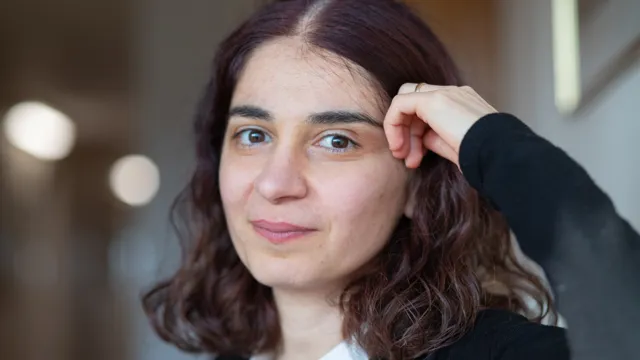
Ten of the projects that have now been granted funding are located at Linköping University. Eleni Stavrinidou, senior associate professor at the Laboratory of Organic Electronics at LiU, is leading one of the research projects in which they will develop materials that can mimic plant photosynthesis:
What is the aim of your project?
“The project aims to develop photosynthetic materials that over time change in dimensions, shape, and mechanical properties and acquire functionality with sunlight as the primary energy source and carbon dioxide as the main carbon source.�
Why is it important?
“Repurposing biology for technology is one of the pathways for a sustainable future reducing synthetic waste and carbon emissions. The integration of living components directly in materials and devices opens new possibilities for energy efficient, sustainable materials that are dynamic and responsive�
In what ways does the project address sustainability issues?
“Photosynthetic materials will convert carbon dioxide into biomass and functional components, generate oxygen, exhibit self-healing and regeneration capabilities, and ultimately biodegrade. Importantly, they will not rely on petrochemicals but instead utilise cell-driven chemistry, avoiding harsh conditions or toxic byproducts. As a result, these materials will be inherently sustainable and circular in nature.�
Research for sustainability
The other LiU researchers granted funds from WISE are: Feng Gao for continued development of perovskite solar cells, Igor Abrikosov for theoretical modelling of permanent magnets without rare earth elements, Jie Zhou for synthesis of 2D materials based on intermetallic compounds, Johanna Rosén for research on nanofilaments that can be used for water purification, Lars Hultman, who will develop two-dimensional precious metals for solar energy, Klas Tybrant for research on soft electronics that can be used for solid-state cooling, Reverant Crispin, who will develop electrochemistry that can create hydrogen and electricity, Simone Fabiano for the development of fluorine-free binding polymers for lithium-ion batteries and finally Vanya Darakchieva for research on semiconductor materials with large band gap where the base material is commonly found in the earth’s crust.