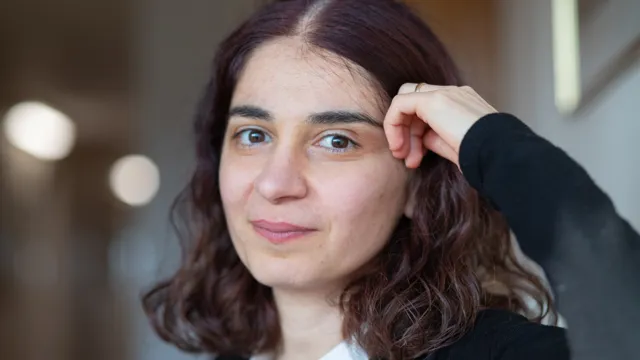
鈥淚n theory, there鈥檚 nothing stopping me taking a mountain bike, going to Mount Everest, climbing the mountain without oxygen, and then cycling home. But, in practice, it鈥檚 quite difficult. This is roughly what things are like for energy communities,鈥� says Fredrik Envall, associate professor at the Department of Thematic Studies, Environmental Change, at Link枚ping University.
Empowering citizens
In 2019, EU member states adopted the energy policy package Clean Energy for all Europeans. It describes energy communities as a way to create a more efficient and sustainable energy system. At the same time, there is a hope that it will make Europeans more positive towards investments in renewable electricity.
In the communities, individuals, municipalities or small and medium-sized companies can join forces to produce, share and store energy. According to the EU directives, they must be run on a non-profit basis and have local roots. The intention is to make it easier for EU citizens to be involved in driving the transition themselves. But the ambitions are much larger than that. Locally co-owned solar cells or wind turbines could transfer influence over the energy system from the big companies to ordinary citizens.
鈥淓nergy communities could be a way to avoid the conflicts we see flare up around wind power establishments,鈥� says Fredrik Envall.
No uniform legislation
According to the directives, EU countries must facilitate the formation of energy communities, but the researchers鈥� analysis shows that in Sweden virtually nothing has been done.
Today, anyone who wants to form an energy community must make their way through a jungle of laws, including the Swedish Electricity Act, concession legislation, consumer legislation and laws on company forms. There are also technical barriers that require a great deal of expertise and formal requirements for different electricity marketplaces. All of this makes it difficult for small, citizen-driven associations.
An interviewee from an energy community striving to work in accordance with the EU鈥檚 social sustainability goals described it as having to 鈥渨riggle like a worm鈥�.
鈥淚n several cases, we鈥檝e seen how they get conflicting information in their negotiations with network owners, for example about gaining access to the network. They describe it as delaying tactics or plain and simple opposition,鈥� says Fredrik Envall.
Legislative changes and recommendations
In a newly written text 鈥� a so-called policy brief 鈥� aimed at decision-makers, the researchers propose solutions to enable the EU鈥檚 energy policy to become a reality in Sweden.
One recommendation is to simplify legislation, another is to ensure that support systems and tax rules promote the formation of energy communities. But the public sector must also help in other ways. Therefore, the researchers propose that the municipalities be commissioned to establish advisory functions for those who want to form an energy community.
Material for study circles
The research project has also aimed to facilitate the formation of energy communities. Therefore, a written report aimed at the public has been produced, as well as material for study circles that has been developed in collaboration with organisations including the study association Studiefr盲mjandet and F盲rnebo Folk High School. Despite the difficulties, interest in energy communities is growing.
鈥淚nterest is hotting up at both local and regional levels and also among some national organisations,鈥� concludes Fredrik Envall.
The research is funded by the Swedish Energy Agency.
Translation: Simon Phillips
鈥�
Policy brief (in Swedish):
Articles: , F Envall, H Rohracher, Environment and Planning E: Nature and Space, 2023, doi: 10.1177/25148486231188263
F Envall, D Andersson, J Wangel, Energy Research & Social Science, vol. 102, 2023, doi: 10.1016/j.erss.2023.103200