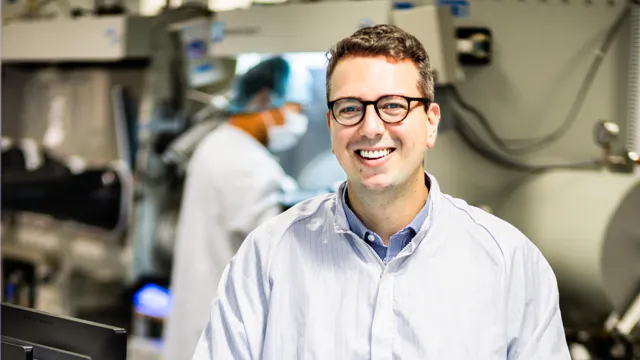
鈥淲e believe it is important and we also see great benefits with biogas. And there are always new opportunities to expand,鈥� says farmer Tom Birgersson, who is also an alumnus of Link枚ping University where he studied Chemical Biology.
Took over
Agriculture and biogas are a good match. The business has grown steadily since the Birgersson family took over the farm in 2008. With more than 600 cows, the volume of manure is considerable, but they now also collect substrate from nearby farms. Tom Birgersson gives a tour of the facility, where they have repeatedly doubled their capacity, from four to twenty鈥慺our gigawatt hours in a decade. And they continue to set new goals.
鈥淲e believe we will soon reach twenty鈥憇even gigawatt hours per year,鈥� says Tom Birgersson.
They depend on being able to distribute and sell the gas, which is compressed but not liquefied. The region鈥檚 investment in biogas vehicles has of course helped. To reduce transport to and from the farm, they have installed an underground pipeline to their nearest filling station in central M氓lilla. The other stations are located in Vimmerby, Hultsfred, Eksj枚 and H枚gsby.
The future
鈥淭he investment by the regional public transport authority has been crucial for us. The trend towards electrification is naturally worrying, but it simply means that we may need to find other customers, possibly further afield,鈥� says Tom Birgersson.
He sees a clear future for biogas but stresses that it requires continuous improvements and that investment support programmes such as Klimatklivet are essential.
鈥淚t is difficult to start this kind of operation without support. We already have manure and food waste. But we can use these resources to produce energy and fertiliser in as many ways as possible. This is becoming increasingly important in society as we begin to think more about sustainability, preparedness and self鈥憇ufficiency,鈥� says Tom Birgersson.